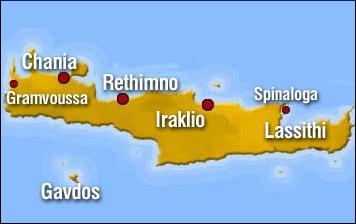
Crete had one of the world’s earliest civilizations, the Minoan civilization, named after King Minos, the legendary author of Cretan institutions; in the ruined palace at Knossos invaluable finds have been made. The Cretan kingdom reached its greatest power, prosperity, and civilization c.1600 B.C. Later, for reasons still obscure, its power suddenly collapsed; but Crete flourished again after the Dorian Greeks settled on the island in large numbers and established city-states. Among the most powerful of the cities (110 in number, according to Homer) were Knossos and Cydonia (modern Khaniá). Although important as a trade center, Crete played no significant part in the political history of ancient Greece. It became a pirate haven in the 3d cent. B.C. but was conquered (68 B.C.–67 B.C.) by the Romans under Quintus Metellus.
More about Crete Historical Event
The island of Crete is equipped with more tourist facilities than any other Greek island, which is fair enough because it is the largest. The reason why thousands of foreigners visit Crete each year, however, is not so much for the traditional Greek island experience, as for investigating the remains of the archaic Minoan culture that flourished here thousands of years before Christ. Some parts of the island have been overpowered by tourist resorts and massive hotels, but fortunately Crete does still allow for exploring endless beaches, numerous villages, remote mountains and some natural curiosities like caves and gorges for those who take pains to avoid the ‘madding crowds’. The famed Minoan archaeological sites, particularly the palace of Knossos and Phaistos, are vast and can take a great deal of time and effort to fully explore and appreciate. There are numerous other sites of interest as well, and not all related to the Minoan era. Crete has experienced thousands of years of habitation and has a complicated and diverse heritage, including years of Roman, Venetian and Turkish rule, that have all left their mark.

More about Crete Attractions
More about Crete Sights
Crete is a colourful jigsaw puzzle of Mythology, History, proud people, mountains, gorges and seashores. The pieces of that puzzle form a magical and unique picture of this large Greek island. In this area you will meet the well known but less advertised Crete, the one hidden in gorges, inaccessible tops, climbable slopes and deep seas that surround Crete. Here you can browse through Sight Categories and find information for more that 500 areas of interest and more that 800 sights.
Â
More about Crete Areas & Sights
More About Crete Sights
- The Minoan civilization, flower of Bronze Age Crete, endures in palaces at Knossos, Phaistos, and Malla.
- Samaria Gorge, 6 hours all the way down, is Europe’s longest.
- At Matala, cliffs full of caves overhang the waves of the Libyan Sea.
- Arab, Venetian, and Ottoman architecture mingle around the harbors of Rethymnon and Chania.
- Remains of Europe’s last leper colony, Spinalonga, linger off the coast of Agios Nikolaos, Crete’s most sophisticated resort town.
More about Highlights of Crete
Crete is a land endowed with a rich historical heritage which spans more than nine millennia since its fertile, secure, and strategically placed land mass has been inhabited since the seventh millennium BC. Cultures on the island have sown the land with ancient palaces, cities, villas, and a plethora of exquisite artifacts which date back to the Minoan era. As a visitor I marveled at the unique cultural heritage of Minoan culture and I created several pages around the experiences and pictures from my visits.
More about Map of Crete
Nurtured by the fertile and secure island of Crete, and situated in the middle of the Mediterranean, the inhabitants of the island developed an advanced culture evident in the artifacts their labor produced. A joyous seafaring people, the Minoans did not create monuments to their gods, or kings. Instead, their art speaks of a humble religion, and their architecture serves the well being of the community, and reveals their relationship to nature and to themselves.
More about Crete Map
Crete is the largest of all the Greek islands and so independent that many Cretans regard it as almost a separate country. One of the most popular tourist destinations, Crete has two international airports and excellent roads. The landscape encompasses rugged snow capped mountains and lush green coastal plains. There are many historical sites to visit including Knossos, home of the fabled Minotaur. In Crete you can enjoy great nightlife, excellent beaches and tasty food. An ideal place to relax and recharge.
More about Map of Crete Island